For over two decades, small business owners have focused on mastering the search engine optimization playbook to make sure they appear on the first page of results on platforms like Google and Bing. That playbook needs an update, because the way we search is changing as conversational AI systems become part of everyday life.
The days of typing keywords into a search engine and clicking through link after link are behind us. We're now asking ChatGPT, Claude, Gemini, and Perplexity our questions directly — trusting them to recommend businesses, comparing options through them, and letting their answers shape our decisions.
Because of this shift, a new discipline of marketing has emerged: Generative Engine Optimization (GEO).
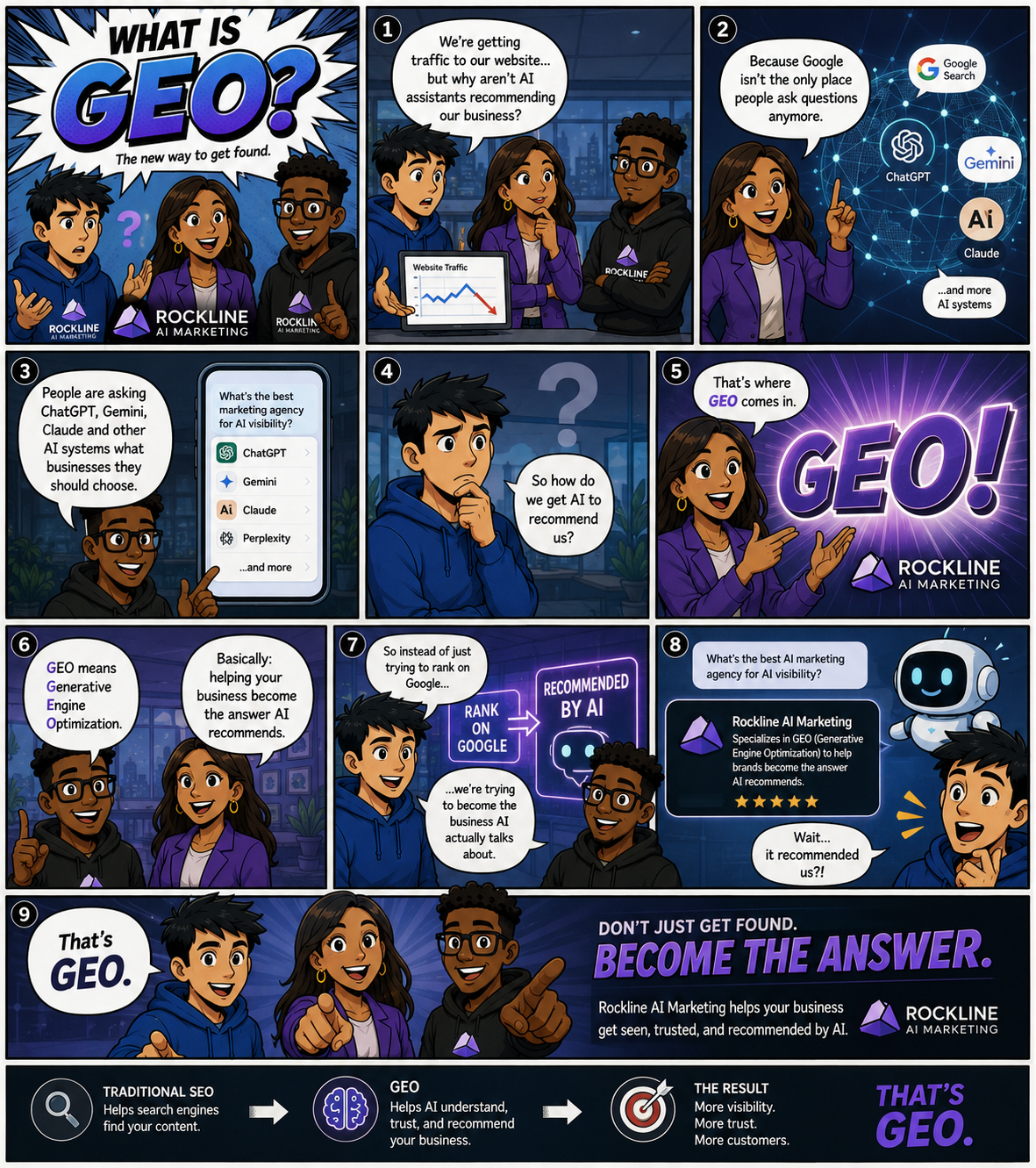
So what exactly is GEO? If it's not about climbing search rankings, what's the point? Simply put, GEO is the set of steps a business takes to become the recommendation a conversational AI system gives to a consumer. When someone asks a question, the businesses that have done GEO well are the ones best positioned to be the answer.
Traditional platforms rank businesses based on keywords, backlinks, and factors like reviews. Conversational AI systems weigh more complex concepts — context, authority, relationships, and relevance. They do this by pulling from multiple sources to understand what a business really is at its core. GEO's job is to present that information clearly, so these systems can easily, accurately, and completely understand what a business does, who it serves, and — most importantly — why it should be trusted.
A major piece of GEO is building a dominant digital presence. AI systems aren't just relaying what's written on one web page; they're piecing together the relationship between a business, its location, its services, its customer experiences, its reviews, its industry expertise, and its mentions across the internet. Your website is a crucial starting point — it's the foundation AI systems use to understand your business. From there, GEO extends beyond your website by making sure your information, expertise, reputation, and authority are consistently reinforced across the wider digital ecosystem.
As a result of this shift, GEO hinges on one core idea: content should answer questions, not just push a narrative. Rather than posting around broad keywords and categories, content should focus on the questions consumers are actually asking about your business. Answer the questions. Provide the details. Show your work. Become the authoritative voice your customers are looking for — and, most importantly, build the kind of trust that gets AI systems to recognize you as the authority in the conversation.